
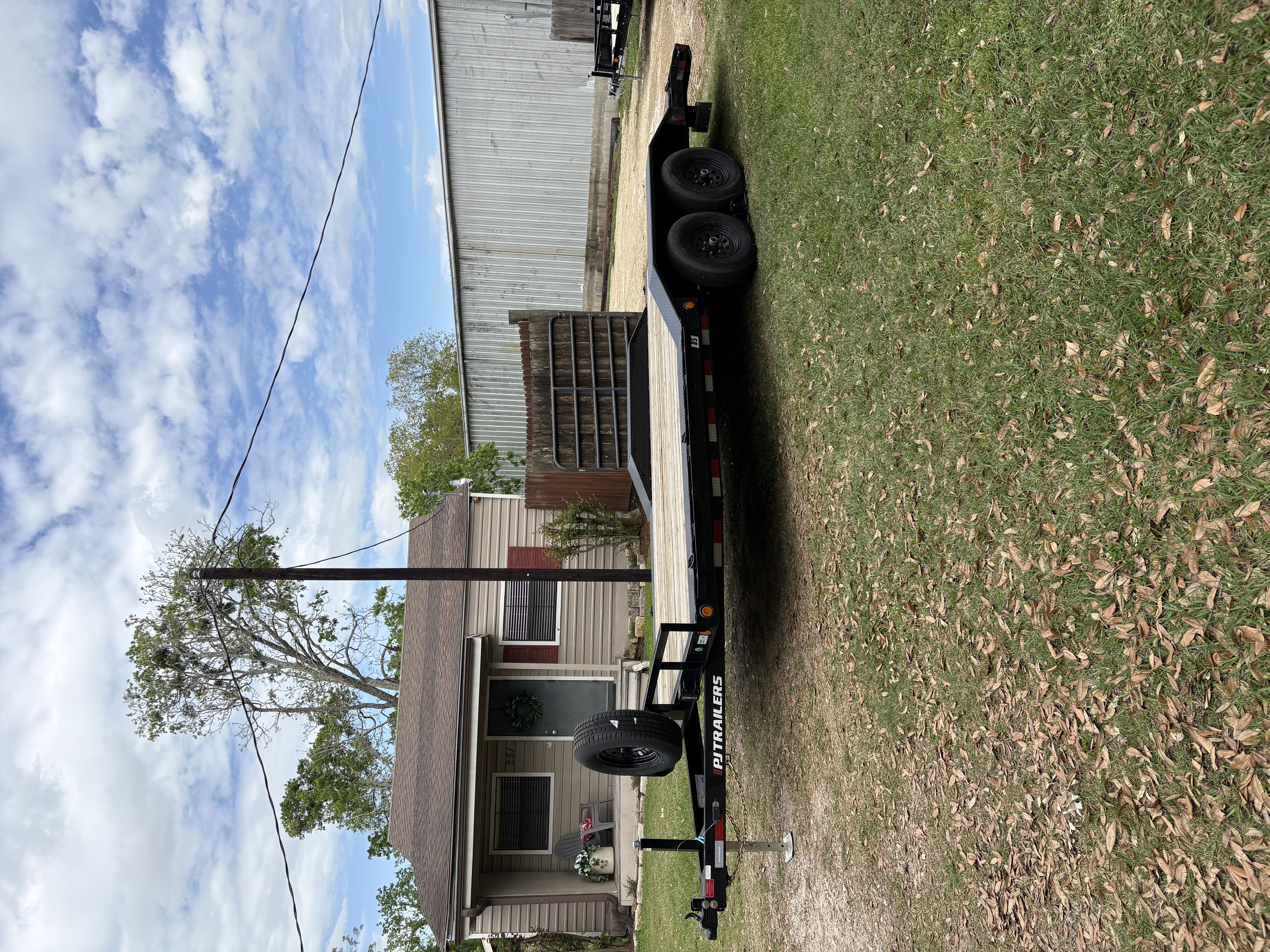
A truck can tow a car hauler only when every part of the combination is properly rated for the actual loaded weight. The truck's advertised maximum towing capacity is only one number. You must also check the truck-specific tow rating, payload, Gross Combined Weight Rating, receiver and hitch ratings, trailer rating, tire ratings and the weight of the vehicle being hauled.
Calculate the estimated loaded trailer weight
Start with the car hauler's empty weight. Add the actual weight of the car, truck, SUV or equipment being transported, plus straps, chains, tools, fuel and anything else placed on the trailer. Use a scale weight when possible. Published curb weights can vary by trim, drivetrain, accessories and modifications.
Estimated loaded trailer weight = empty trailer weight + hauled vehicle or equipment + all additional cargo.
Find the rating for your exact truck
Do not rely on a commercial, a search result or the largest tow rating advertised for that model line. Ratings can change with engine, transmission, axle ratio, cab, bed, drivetrain and towing package. Check the driver-door labels, owner's manual, manufacturer towing guide and any vehicle-specific towing information supplied with the truck.
Check these limits before towing
| Rating | Why it matters |
|---|---|
| Tow rating | Limits the trailer weight the specific truck configuration may tow. |
| Payload | Must cover people, cargo, accessories and trailer tongue weight carried by the truck. |
| GVWR | Maximum permitted weight of the loaded truck itself. |
| GCWR | Maximum permitted combined weight of the loaded truck and loaded trailer. |
| Receiver and hitch | Each component must be rated for the trailer and tongue weight. |
| Axle and tire ratings | The loaded truck and trailer must remain within their applicable limits. |
Payload is often the overlooked limit
Trailer tongue weight presses down on the truck and counts against available payload. Passengers, tools, coolers and cargo in the truck also use payload. A truck may appear to have enough towing capacity but still exceed payload, rear-axle or tire limits after the trailer is connected and the cab and bed are loaded.
The hitch and connections must match
Fort Bend Trailer Rentals car haulers use a 2-5/16-inch ball and require a compatible receiver and properly rated hitch components. The tow vehicle must have the required 7-way electrical connection. Electric trailer brakes require a functioning compatible brake controller. Safety chains and the breakaway cable must be connected correctly and kept separate so each can operate as designed.
Position the vehicle correctly on the trailer
The hauled vehicle must be positioned to maintain proper tongue weight and stable handling without exceeding any rating. Too little tongue weight can contribute to trailer sway, while too much can overload the truck, hitch or trailer. Vehicle position should be based on actual load behavior and applicable manufacturer guidance, not simply centered by sight.
Fort Bend Trailer Rentals car haulers
Both of our 20-foot car haulers have winches. A winch may assist with loading a non-running vehicle when used correctly, but it does not secure the vehicle for transport. The hauled vehicle must still be restrained with properly rated securement equipment at appropriate attachment points. Winch use, loading and securement must follow the equipment manufacturers' instructions.
When the answer should be no
- The truck-specific ratings cannot be confirmed.
- The estimated loaded trailer exceeds the truck, trailer, hitch, axle or tire rating.
- Passengers, cargo and tongue weight would exceed available payload.
- The truck lacks the correct receiver, 2-5/16-inch ball, 7-way connection or functioning brake controller.
- The hauled vehicle cannot be positioned and secured correctly.
- Any tire, light, brake, hitch or safety component is damaged or not functioning properly.