
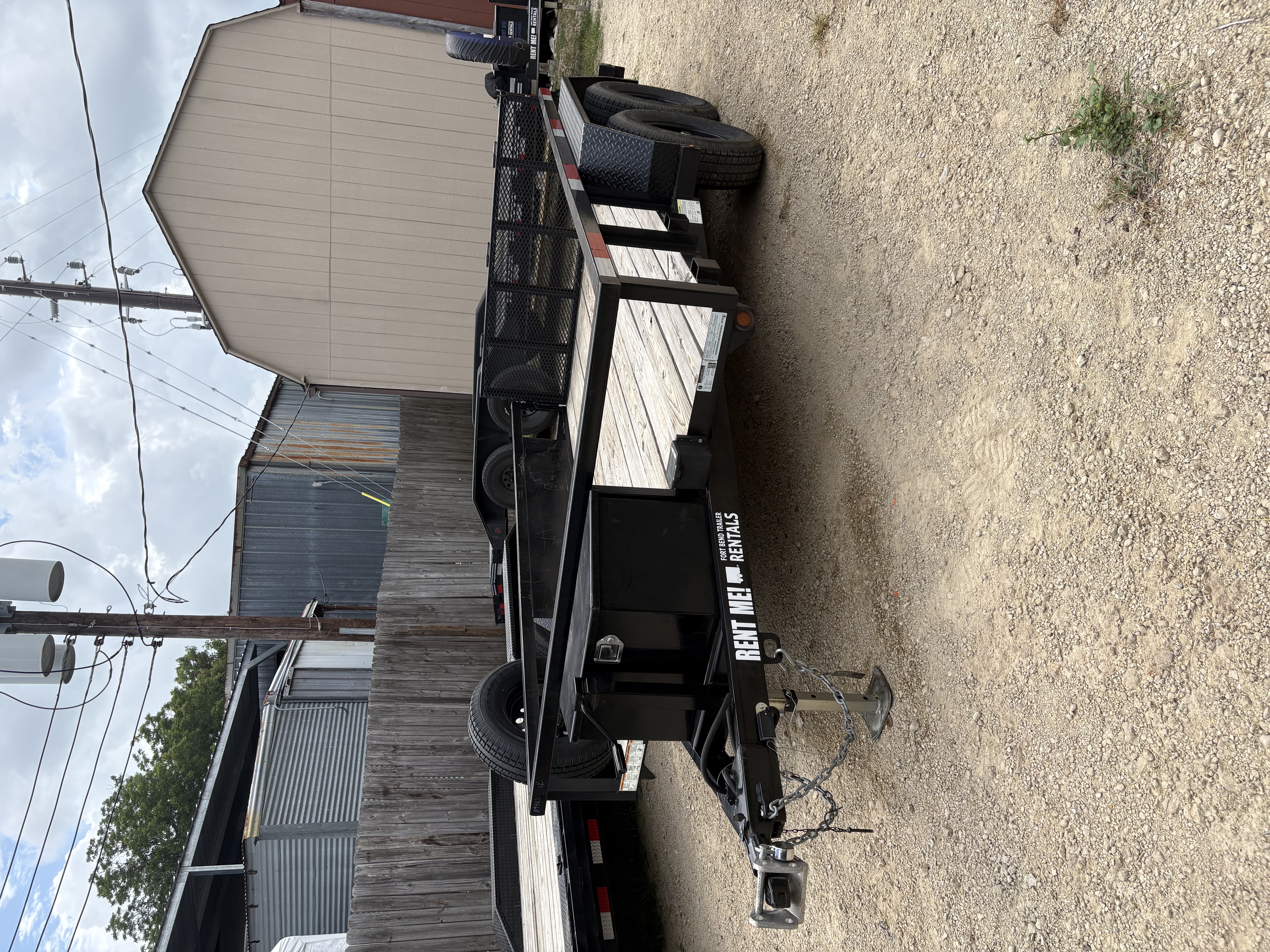
The right trailer for a zero-turn mower is determined by more than the mower deck's advertised cutting width. You need the mower's total outside width, overall length and operating weight, plus enough clearance to pass through the trailer opening and enough ramp length to load without the mower deck or frame dragging.
Measure the mower at its widest point
A mower advertised with a 54-inch or 60-inch cutting deck may be wider once the discharge chute, anti-scalp wheels and tires are included. Measure the mower exactly as it will be transported. If the discharge chute folds, confirm both its transport position and the manufacturer's instructions.
- Measure total width, including the chute and tires.
- Measure overall length with attachments in their transport positions.
- Check the mower's operating weight with fuel and installed accessories.
- Include baggers, collection systems, spare blades, fuel cans or other cargo in the load calculation.
Confirm the gate and deck dimensions
The mower must clear the narrowest point of the loading opening, not merely fit on the main deck. Check the opening between rails, gate supports and hinges. Leave reasonable clearance on both sides so the operator does not need to place a tire on the edge of the ramp or trailer.
Deck length matters too. The mower must sit completely on the trailer with room for proper weight distribution and securement. Do not let any part of the mower interfere with the gate, ramps, coupler or trailer lighting.
Pay attention to ramp angle and breakover clearance
Zero-turn mowers sit low and can catch the mower deck or frame where the ramp meets the trailer. A longer ramp or lower loading angle can make loading easier. Approach slowly and straight, use level and firm ground, and never stand downhill or directly behind the mower while it is being loaded.
If a mower has low ground clearance, attachments or an unusually long wheelbase, discuss the measurements before choosing the trailer. Do not improvise with loose boards or unapproved ramp extensions.
Check payload and weight distribution
Add the mower's operating weight to the weight of any fuel, attachments, tools and other cargo. That total must remain below the trailer's available payload. Position the mower so the loaded trailer maintains appropriate tongue weight without exceeding the tow vehicle, receiver, hitch or trailer ratings. Follow the applicable manufacturer instructions rather than relying on appearance alone.
Secure the mower before travel
Set the parking brake, lower the mower deck when appropriate and use rated tie-down equipment at approved structural points. Secure the mower against movement in every direction. Do not rely on the parking brake by itself, and do not attach straps to the seat, plastic panels or other parts not designed for securement.
Quick selection checklist
| Check | What to confirm |
|---|---|
| Opening width | The mower's widest point clears the gate and fixed supports. |
| Deck length | The entire mower fits with room for positioning and securement. |
| Payload | Mower, fuel, attachments and extra cargo remain within capacity. |
| Ramp angle | The mower can transition onto the deck without bottoming out. |
| Anchor points | Rated tie-down points are available in useful positions. |
| Tow setup | Vehicle, hitch, electrical connector and tires are properly rated. |
Which Fort Bend trailer should I consider?
A smaller zero-turn mower may fit one of our shorter utility trailers, while a larger commercial mower or a load that includes attachments may require a longer utility trailer. The correct option depends on the mower's total width, overall length, operating weight and loading clearance. Measure first rather than choosing from the cutting-deck size alone.